
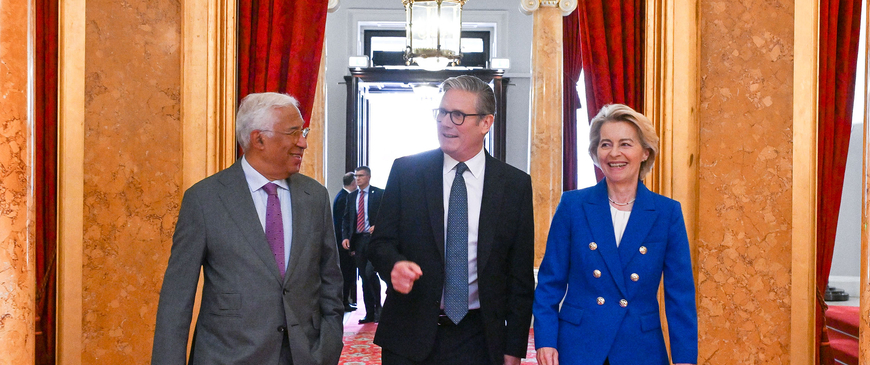
EU and UK urged to step up “re-set” efforts
Ajoint paper by the Centre for European Reform and the Konrad-Adenauer-Stiftung UK and Ireland asks: “EU-UK relations: Will 2026 be the year to reset the reset?” It concludes by saying the EU and UK need a “fundamental rethink of how they can enhance their security and prosperity.”
The author of the paper, Ian Bond, said “Since the UK voted for Brexit, Europeans have had to deal with Russia’s war against Ukraine, Donald Trump’s aggressive trade policy and his threats to annex Greenland, and China’s willingness to use its near-monopoly on the supply of critical minerals to put pressure on other countries. In turbulent times, the EU and the UK would both benefit from overcoming the lack of trust that the Brexit process engendered.”
Bond, deputy director of Brussels-based Centre for European Reform, adds, “They should work together in pursuit of shared economic and security interests, including increasing European strategic autonomy”.
The Centre for European Reform and Konrad-Adenauer-Stiftung UK policy brief is based on a detailed assessment of progress in implementing steps towards a closer relationship that were agreed at the first ever EU-UK summit meeting in May 2025.
The paper says that the Labour government that took office in the UK in July 2024 proclaimed a reset in relations with the EU. At the May 2025 summit meeting, European Commission president Ursula von der Leyen described the EU and UK as “historical and natural partners standing side by side on the global stage, facing the same challenges, pursuing the same objectives, like-minded, sharing the same values”.
But eight months after the meeting, there is, says the paper, a sense of lost momentum on both sides.
“Some of the reduced impetus was down to the British government’s continued reluctance for much of 2025 to confront eurosceptics in the media and the political opposition. Labour in 2025 remained disappointingly willing to tolerate the well-documented economic damage caused by being outside the EU,” it says.
It goes on, “The EU must also take a share of the blame.”
“There is still a sense among EU officials and member-states that the UK should be made to pay a price for Brexit.
“The two sides failed to agree on terms for the UK’s participation in the EU’s Security Action for Europe programme – designed to promote joint procurement of much-needed weapons and munitions for European defence – after the EU demanded a huge up-front payment from the UK.”